BYD vs Sungrow Battery Australia 2026: Which Offers Better Value?
BYD and Sungrow are two of the most popular value-focused battery brands in Australia in 2026 — both offering strong specifications at prices well below the Tesla Powerwall 3. But they suit different situations. Here’s a direct comparison to help you choose.
Quick Verdict
| Your situation | Better choice |
|---|---|
| Retrofitting to existing non-Sungrow solar | BYD Battery-Box |
| New solar + battery install from scratch | Sungrow SBR |
| Maximum value per kWh | Sungrow SBR |
| Broadest inverter compatibility | BYD Battery-Box |
Specifications Compared
| BYD Battery-Box HVM | Sungrow SBR | |
|---|---|---|
| Usable capacity | 16.6 kWh | 9.6–25.6 kWh |
| Continuous power | 7 kW | 5–9.6 kW |
| Round-trip efficiency | 96% | 97% |
| Cell chemistry | LFP | LFP |
| Inverter compatibility | Fronius, SMA, SolarEdge, GoodWe, Sungrow | Sungrow SH hybrid only |
| Installed price (approx.) | $9,000–$13,000 | $8,500–$13,000 |
| Warranty | 10 years | 10 years |
The Key Difference: Inverter Compatibility
The single most important difference between these two batteries is inverter compatibility. The BYD Battery-Box works with a wide range of inverter brands — Fronius, SMA, SolarEdge, GoodWe, and Sungrow. This makes it the more flexible choice for retrofitting to an existing solar system.
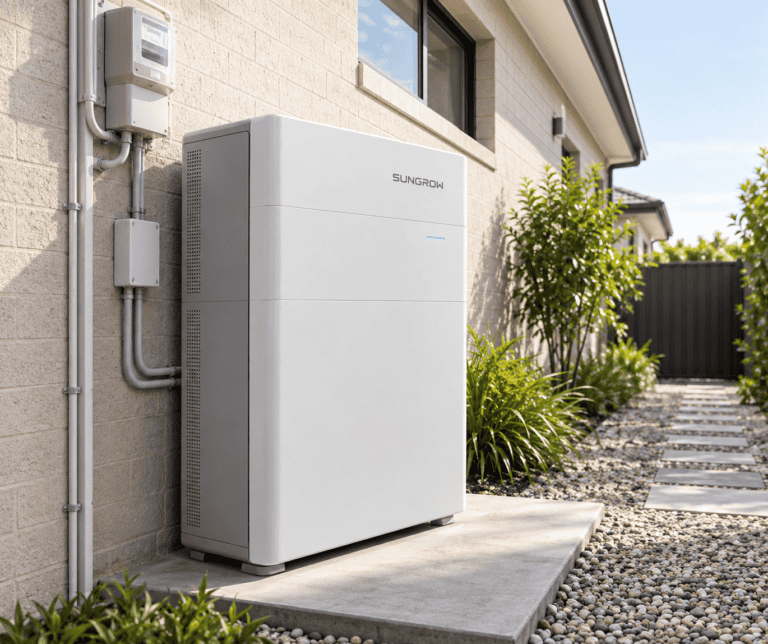
The Sungrow SBR only works with a Sungrow SH-series hybrid inverter. If you’re building a new system from scratch this is fine — but if you have existing solar with a non-Sungrow inverter, you’d need to replace it, adding $2,000–$3,500. See our detailed Sungrow battery review and our guide to adding a battery to existing solar for more on this.
Which Wins on Value?
On raw value per kWh, Sungrow edges ahead — its 97% efficiency and competitive pricing make it the lowest cost-per-kWh option for new installs. But that assumes you’re buying a Sungrow inverter too. For retrofits, BYD often wins on total cost because it avoids the inverter replacement. Both qualify for the federal Cheaper Home Batteries Program rebate.
For a broader comparison including Tesla and Alpha ESS, see our best solar batteries Australia guide.
Frequently Asked Questions
Do both BYD and Sungrow qualify for the federal rebate?
Yes. Both are on the Clean Energy Council approved products list and qualify under the Cheaper Home Batteries Program.
Which is better for blackout backup?
Both provide backup capability. BYD offers 7 kW continuous; Sungrow offers up to 9.6 kW on larger models. Neither matches Tesla Powerwall 3’s 11.5 kW for whole-home backup.
Prices reflect installed costs as at September 2026 before the federal rebate.