Tesla Powerwall 3 Australia 2026: Price, Specs and Is It Worth It?
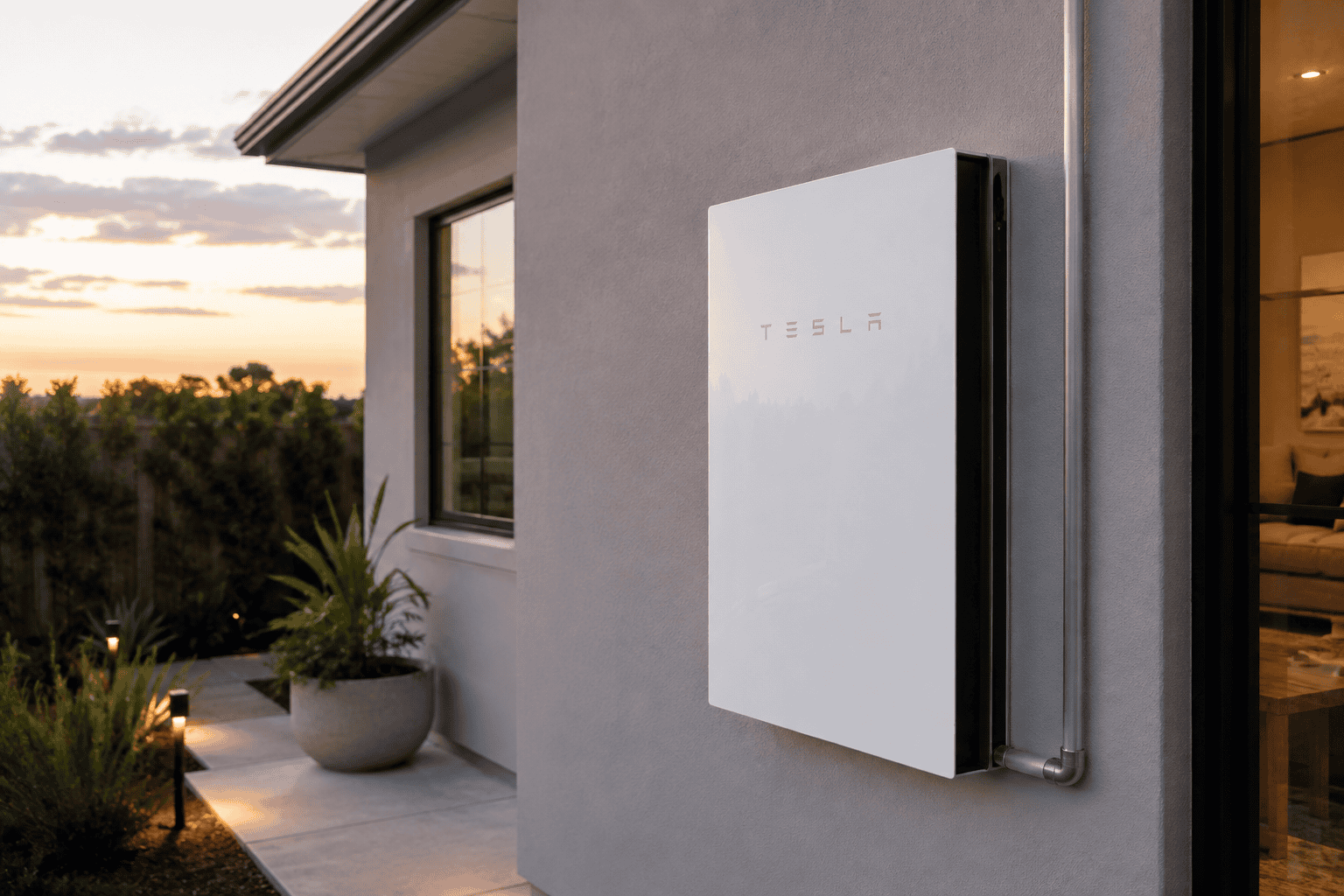
The Tesla Powerwall 3 is Australia’s most recognised home battery — and for good reason. It has the highest continuous power output of any residential battery on the market, a built-in solar inverter, and the most polished software experience available. It’s also one of the more expensive options.
This guide gives you the current Australian pricing, full specs, honest pros and cons, and a straight answer on whether it’s worth the premium over cheaper alternatives.
Tesla Powerwall 3 Price in Australia 2026
Australian pricing for the Tesla Powerwall 3 unit starts at $11,200, which includes the 13.5 kWh battery and integrated inverter. This price does not include the compulsory Tesla Backup Gateway unit which costs an additional $1,950, nor the cost of installation.
Once you add installation labour, electrical work, and the Gateway, total installed costs typically run:
| Configuration | Installed price (before rebate) |
|---|---|
| Powerwall 3 — new solar + battery install | $13,500–$16,500 |
| Powerwall 3 — retrofit to existing solar | $15,000–$18,500 |
| Two Powerwall 3 units | $22,000–$28,000 |
Retrofit installations tend to cost more because additional electrical work is required to integrate the Powerwall with your existing system.
Federal rebate
As of May 2026, the Australian government battery rebate reduces the cost of a single Powerwall 3 unit by around $3,367. The federal rebate is tiered — the first 14 kWh of useful capacity receives the full amount.
After the Cheaper Home Batteries Program rebate, a single Powerwall 3 installed typically costs $10,000–$15,000 depending on your state and installation complexity. See our full guide to the Cheaper Home Batteries Program 2026 for eligibility details.
Tesla Powerwall 3 Specifications
| Specification | Powerwall 3 |
|---|---|
| Usable capacity | 13.5 kWh |
| Continuous power output | 11.5 kW |
| Peak power output | 185A / 30kW (10 seconds) |
| Round-trip efficiency | 97.5% |
| Solar input | Up to 20 kW DC |
| Warranty | 10 years |
| Dimensions | 1050mm H × 609mm W × 193mm D |
| Weight | 124 kg |
| Operating temperature | -20°C to 50°C |
| VPP capable | Yes |
| Backup capable | Yes — whole-home |
The standout figure is the 11.5 kW continuous output. Most competing batteries deliver 5–9 kW. In practical terms, this means the Powerwall 3 can simultaneously power your air conditioner, oven, washing machine, and other high-draw appliances during a grid outage without tripping. No other residential battery currently available in Australia matches this.
The 97.5% round-trip efficiency is also class-leading — meaning very little energy is lost in each charge and discharge cycle compared to competitors sitting at 89–95%.
The Integrated Inverter — What It Means in Practice
The biggest change from the Powerwall 2 is the built-in solar inverter. This matters differently depending on your situation:
If you’re installing solar and a battery together from scratch: The Powerwall 3’s integrated inverter simplifies the system — you don’t need a separate solar inverter. This reduces equipment costs and complexity.
If you’re adding a battery to existing solar: The Powerwall 3 is AC-coupled, meaning it connects to your existing system regardless of what inverter you have. You keep your current solar inverter and add the Powerwall alongside it. This is a significant advantage over DC-coupled alternatives like Sungrow’s SBR, which require a Sungrow-brand hybrid inverter.
Pros and Cons
Pros:
- Highest continuous power output of any residential battery (11.5 kW) — essential for whole-home blackout backup
- Excellent round-trip efficiency (97.5%)
- Works with any existing solar inverter — no need to replace your current setup
- Best-in-class app and monitoring — real-time data, Storm Watch, VPP integration
- Integrated inverter reduces components for new installs
- Strong brand recognition — if you resell your home, buyers understand what a Powerwall is
- Eligible for federal battery rebate (~$3,367 off)
Cons:
- Among the more expensive batteries per kWh of storage
- Requires the Tesla Backup Gateway (additional $1,950) — this is often not prominently disclosed in quotes
- At 124 kg, it’s heavier than most alternatives — installation can be more complex in some locations
- 10-year warranty is standard, not exceptional — some competitors offer 12–15 years
- Tesla’s own installer network means less choice of who installs it compared to brand-agnostic batteries
Who the Powerwall 3 Is Best For
Ideal for:
- Households doing a new solar-plus-battery installation who want the simplest, most integrated system
- Anyone who prioritises whole-home blackout protection — the 11.5 kW output is genuinely unmatched
- Tesla vehicle owners (Powerwall + Tesla car creates a V2H-capable home energy system)
- Households in areas with frequent or extended grid outages
- People who value a polished app experience and want detailed monitoring
Consider alternatives if:
- You’re budget-conscious and primarily want to reduce your electricity bills rather than backup power — Sungrow SBR or Alpha ESS offer better value per kWh
- You’re adding a battery to an existing Sungrow solar system — the Sungrow SBR pairs more efficiently in that configuration
- You want the maximum storage capacity — Fox ESS scales to much larger capacities at competitive per-kWh pricing
Powerwall 3 vs The Alternatives
| Powerwall 3 | Sungrow SBR | BYD Battery-Box | Alpha ESS | |
|---|---|---|---|---|
| Usable capacity | 13.5 kWh | 9.6–25.6 kWh | 16.6 kWh | 5.7–22.8 kWh |
| Continuous power | 11.5 kW | 9.6 kW | 7 kW | 5–7.5 kW |
| Efficiency | 97.5% | 97% | 96% | ~95% |
| Installed price (approx.) | $13,500–$16,500 | $8,500–$13,000 | $9,000–$13,000 | $8,500–$12,000 |
| Retrofit friendly | ✅ Any inverter | ❌ Sungrow only | ✅ Most inverters | Partial |
| Warranty | 10 years | 10 years | 10 years | 10 years |
For a deeper comparison, see our full guide to the [Best Solar Batteries in Australia 2026].
The Powerwall 3 is more expensive, but it includes an inverter that the Sungrow and BYD do not. For a brand-new install, add $1,500 to $3,000 to the BYD and Sungrow figures to account for the hybrid inverter they require. This narrows the real price gap meaningfully.
Is the Powerwall 3 Worth the Money?
At a post-rebate cost of around $8,000–$9,000 installed, and with typical annual savings of $800–$1,400 depending on tariff, usage, and VPP participation, the Powerwall 3 pays back in approximately 6 to 11 years — within its 10-year warranty window for many households.
Whether that’s worth it depends on what you’re optimising for:
If your primary goal is electricity bill reduction: The Powerwall 3 is not the best value option. A Sungrow SBR at lower cost will deliver similar bill savings for less money, with a shorter payback period.
If your primary goal is backup power and energy independence: The Powerwall 3 is the best option available. Its 11.5 kW continuous output means your home runs normally during outages — not in a reduced “essential circuits only” mode that most other batteries default to.
If you’re doing a combined new solar and battery installation: The Powerwall 3’s integrated inverter and excellent efficiency make it genuinely competitive on a total system cost basis. Get quotes with and without the Powerwall and compare the total system price rather than just the battery price.
How to Buy a Powerwall 3 in Australia
Tesla sells the Powerwall 3 exclusively through its network of certified installers. You can:
- Get a quote directly through Tesla’s website (tesla.com/en_AU/powerwall)
- Get quotes from Tesla-certified third-party installers in your area
- Compare quotes through Solar Choice or similar comparison services
Always get at least two or three quotes. Powerwall 3 pricing varies between installers — some add margin on top of the Tesla supply price, others are more competitive. The federal rebate applies regardless of which certified installer you use.
Frequently Asked Questions
Does the Powerwall 3 work during a blackout? Yes — this is one of its strongest features. With 11.5 kW continuous output, it can power essentially any combination of household appliances during an outage. It automatically detects a grid outage and switches to backup mode within milliseconds.
Can I expand my Powerwall 3 capacity? Yes. Up to four Powerwall 3 units can be stacked together for a maximum of 54 kWh of storage. Each additional unit requires its own installation costs.
Does the Powerwall 3 qualify for the federal battery rebate? Yes. The Tesla Powerwall 3 is on the Clean Energy Council’s approved battery list and is eligible for installation under the national Cheaper Home Batteries scheme. It has Virtual Power Plant (VPP) capability, which is a key requirement of the federal scheme.
How does the Tesla app work? The Tesla app provides real-time monitoring of your solar generation, battery state, home consumption, and grid import/export. It includes Storm Watch (automatically charges the battery fully when severe weather is forecast), time-of-use optimisation, and VPP enrolment options.
What’s the difference between Powerwall 2 and Powerwall 3? The Powerwall 3 adds an integrated solar inverter (the Powerwall 2 required a separate inverter), increases power output from 7 kW to 11.5 kW, and improves efficiency from 90% to 97.5%. It’s a meaningful upgrade, not a minor refresh.
Prices are approximate installed costs as at August 2026 before the federal Cheaper Home Batteries Program rebate. Always obtain a site-specific quote before making purchasing decisions.