6.6kW Solar System Australia 2026: Cost, Output and Is It the Right Size for You?
If you’ve spent more than ten minutes researching solar, you’ve already seen 6.6 kW mentioned everywhere. It’s Australia’s most popular residential solar system size by a significant margin — and there’s a specific technical reason for that which has nothing to do with marketing.
This guide explains what a 6.6 kW system actually is, what it costs in 2026, how much electricity it produces, and whether it’s the right choice for your home.
Why 6.6 kW Is Everywhere
The prevalence of 6.6 kW systems comes down to one rule from the Clean Energy Council: you can oversize your solar panels by up to 33% compared to your inverter’s capacity.
With the most common residential inverter size (5 kW), you can fit up to 6.65 kW of panels. This means a 5 kW inverter — the standard single-phase residential inverter — can legally support up to 6.6 kW of panels. Installers maximise this because more panels means more solar generation and faster payback for the same inverter cost.
In simple terms: 6.6 kW is the maximum you can install with a standard 5 kW inverter, so most standard residential installs land at that figure. It’s a regulatory sweet spot, not a coincidence.
What Does a 6.6 kW System Actually Consist Of?
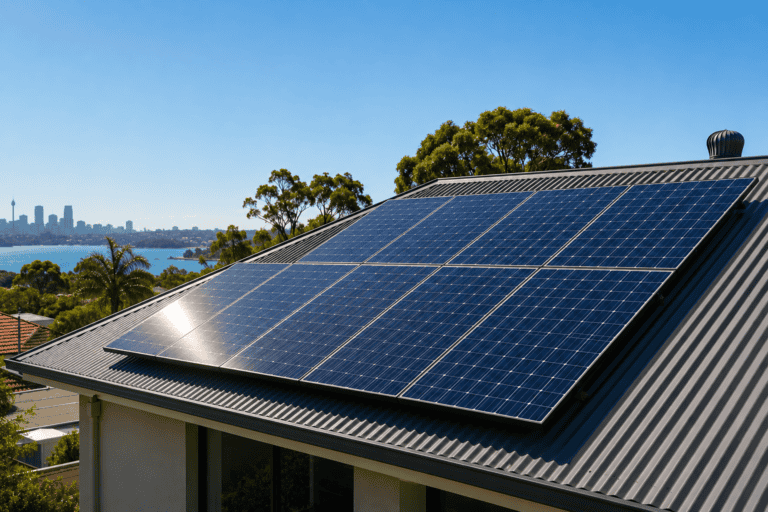
A 6.6 kW system in 2026 typically consists of:
- 15 panels using modern 440–445W panels
- 1 × 5 kW string inverter (or a hybrid inverter if you’re adding a battery)
- Mounting hardware, wiring, and switchboard connections
On average, a 6.6 kW solar system produces between 23 kWh and 29 kWh per day, depending on your location. Sydney homes average 25.7 kWh, while Perth homes see up to 29.0 kWh.
Roof space required is approximately 22–30 square metres depending on panel wattage and whether tilt frames are needed. Most Australian homes have more than enough north-facing roof space to accommodate this.
How Much Does a 6.6 kW System Cost in 2026?
Prices have remained relatively stable over the past two years as panel costs have fallen but labour and material costs have risen to offset them.
6.6 kW solar system prices range from $4,000–$7,500 after rebates in 2026. The wide range reflects differences in panel quality, inverter brand, installation complexity, and your location.
Here’s a breakdown by city:
| City | Typical installed price (after STC rebate) |
|---|---|
| Sydney | $4,500–$7,000 |
| Melbourne | $4,200–$6,800 |
| Brisbane | $4,000–$6,500 |
| Adelaide | $4,500–$7,000 |
| Perth | $4,000–$6,500 |
| Darwin | $5,000–$7,500 |
| Hobart | $5,000–$7,500 |
The STC rebate is already factored into these prices — it’s applied automatically as an upfront discount by your installer. For a 6.6 kW system, the rebate typically reduces your cost by $1,500–$2,200 depending on your STC zone.
What drives the price variation?
The biggest price variable is panel and inverter quality. A system using budget Tier 1 panels (Trina, Jinko) with a Fronius or SMA inverter is at the lower end of the range. A system using premium panels (REC, SunPower, Aiko) with a high-end inverter sits at the top. Both can be quality systems — the difference is longevity and efficiency, not basic reliability.
How Much Electricity Does It Generate?
In a typical year, a 6.6 kW system in most parts of Australia produces around 9,000 to 10,500 kWh of electricity.
Daily output varies significantly by season and location:
| City | Summer daily output | Winter daily output | Annual output |
|---|---|---|---|
| Darwin | 32–35 kWh | 25–28 kWh | ~10,500 kWh |
| Brisbane | 28–32 kWh | 18–22 kWh | ~9,800 kWh |
| Perth | 30–34 kWh | 18–22 kWh | ~10,200 kWh |
| Sydney | 26–30 kWh | 16–20 kWh | ~9,200 kWh |
| Adelaide | 28–32 kWh | 15–19 kWh | ~9,400 kWh |
| Melbourne | 24–28 kWh | 12–15 kWh | ~8,400 kWh |
| Hobart | 20–24 kWh | 9–12 kWh | ~7,200 kWh |
Melbourne and Hobart see notably lower winter output due to shorter days and more cloud cover. This is one reason households in southern states sometimes consider larger systems (8–10 kW) to compensate for seasonal variation.
How Much Will You Save?
For a typical Aussie household with reasonable daytime usage, a 6.6 kW system will usually save $1,500 to $2,500 per year on electricity.
The actual figure depends heavily on:
How much you use during the day. Every unit of solar you consume directly saves you the full retail electricity rate (30–45c/kWh). Every unit you export only earns you the feed-in tariff (3–10c/kWh). A household that runs appliances during the day saves significantly more than one that uses most power in the evenings.
Whether you add a battery. A battery captures surplus daytime solar for evening use, pushing your self-consumption rate from ~30% to ~85%. This can add $800–$1,500 per year in additional savings on top of the solar-only figure.
Your electricity tariff. Households on higher electricity rates save more per unit of solar consumed. South Australian households on 40–45c/kWh rates save considerably more than Tasmanian households on lower rates.
Payback Period — What to Expect
A 6 kW solar system costs $5,200–$8,800, produces around 19–24 kWh per day, and typically suits medium to larger homes looking to save $1,800–$2,500 per year.
At those savings rates, payback periods look like this:
| System cost (after rebate) | Annual savings | Payback period |
|---|---|---|
| $4,500 | $1,800 | 2.5 years |
| $5,500 | $2,000 | 2.75 years |
| $6,500 | $2,000 | 3.25 years |
| $7,500 | $2,200 | 3.4 years |
After payback, the savings continue for the remaining life of the system — typically 20+ years for the panels and 10–15 years for the inverter. In 2026, most Australian homeowners see a return on investment within 2 to 4 years. This rapid payback is driven by rising grid electricity costs and the efficiency of modern Tier 1 panels.
Is 6.6 kW the Right Size for Your Home?
A 6.6 kW system is well-matched to the typical 3–4 bedroom Australian home consuming 15–25 kWh per day. But “typical” covers a wide range. Here’s how to think about whether it’s right for you specifically:
A 6.6 kW system is likely right if:
- Your household uses 15–25 kWh per day (check your electricity bill for your daily average)
- You have a standard 3–4 bedroom home
- You have good north-facing roof space with minimal shading
- You’re on a single-phase electricity connection (most suburban homes are)
Consider a larger system (8–13 kW) if:
- You use more than 25 kWh per day (large family, ducted air conditioning, pool)
- You’re planning to add an electric vehicle in the next 1–3 years
- You’re in Melbourne or Hobart where lower solar irradiance means you need more panels to generate equivalent electricity
- You’re adding a large battery and want to maximise charging
A smaller system (3–5 kW) may be sufficient if:
- Your household uses under 12 kWh per day
- Your roof space is limited or heavily shaded
- Your budget is constrained and you want a starting point you can expand later
The Battery Question
The 6.6 kW system is the most common solar-only system, but increasingly Australians are pairing it with a battery from day one.
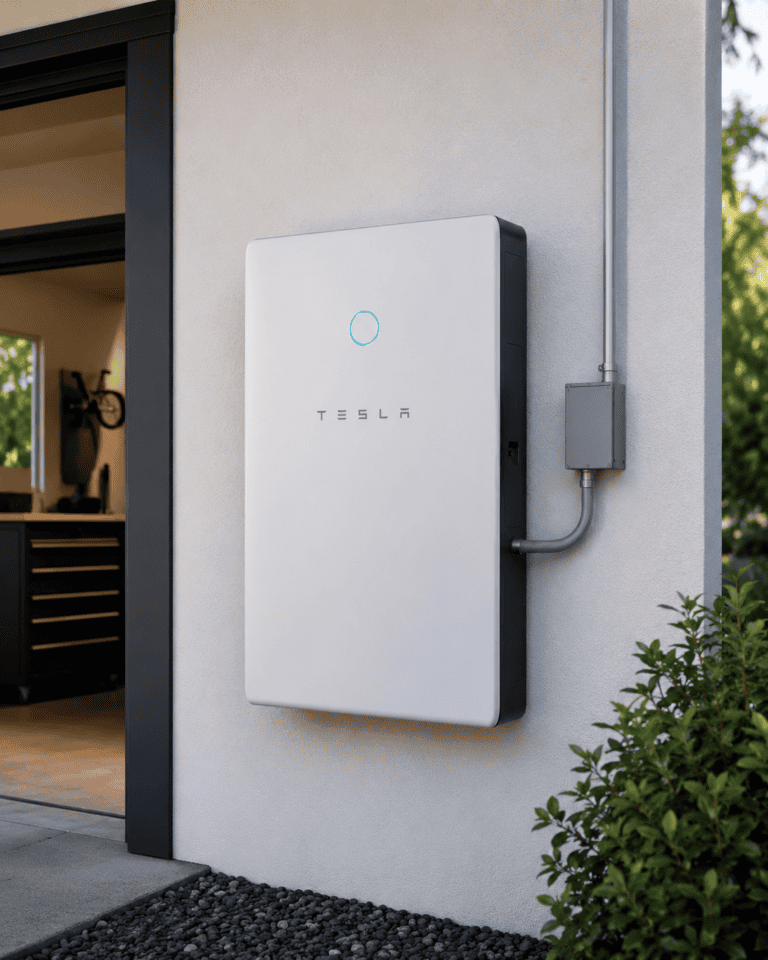
For most Australian households with a 6.6 kW solar system, a 10–13.5 kWh battery is the optimal size. This stores approximately half of a typical day’s solar generation, enough to power evening usage without paying peak grid rates.
The federal Cheaper Home Batteries Program reduces the cost of an eligible battery by $3,000–$5,000+ depending on size, making the combined solar-plus-battery option significantly more accessible than it was even 12 months ago.
If you’re going solar now, it’s worth getting a quote for solar-plus-battery alongside the solar-only price. The incremental cost of adding a battery now (versus retrofitting later) is often lower, and you start capturing savings from day one. See our guide to the Cheaper Home Batteries Program 2026 for current rebate details.
What to Look for in a Quote
When you receive quotes for a 6.6 kW system, check the following:
Is the price shown before or after the STC rebate? Ask explicitly. Some quotes show the gross price, others the net price. You need to compare net (after rebate) prices.
What inverter is included? The inverter is the component most likely to need replacement during the system’s life (typically 10–15 year lifespan versus 25+ years for panels). Common reliable brands include Fronius, SMA, SolarEdge, GoodWe, and Sungrow. Avoid inverters from brands you can’t find any Australian service information for.
What panels are specified? Ask for the specific brand and model. Look it up — check the efficiency, warranty terms, and whether the model is on the CEC approved product list.
What does the workmanship warranty cover? Your installer’s workmanship warranty should cover the installation itself for at least 5 years. Some installers offer 10 years. This is separate from the panel and inverter warranties.
Is the installer SAA-accredited? Check at saaustralia.com.au — non-accredited installations don’t qualify for the STC rebate and may not meet Australian electrical safety standards.
Frequently Asked Questions
How many panels does a 6.6 kW system require? Using modern 440W panels: 15 panels. Using 400W panels: 17 panels. The number varies depending on the wattage of the specific panel your installer quotes.
Will a 6.6 kW system eliminate my electricity bill? Rarely entirely — unless you have very low usage or add a battery. It will typically reduce your bill by 50–80%, with the remainder being evening usage purchased from the grid.
Can I upgrade from 6.6 kW to a larger system later? Yes, with some limitations. Your network operator limits the total system size they’ll approve for your connection. In most states, single-phase connections are approved for up to 10 kW of panels. If you want to go larger, you may need a three-phase connection or network approval.
Does a 6.6 kW system require council approval? In most cases, no — solar installations under a certain size are exempt from development approval in all states and territories. Your installer will handle any required network notifications.
What happens to excess electricity my system generates? It’s exported to the grid and you receive a feed-in tariff credit on your electricity bill. See our guide to Solar Feed-in Tariffs Australia 2026 for current rates by state.
Prices and output figures reflect the Australian market as at August 2026. Actual system performance depends on roof orientation, shading, location, and installation quality. Always obtain multiple quotes before committing.