Solar Feed-in Tariffs Australia 2026: Every State’s Rates Explained
If you have solar panels, you earn a feed-in tariff every time your system exports electricity to the grid. The question in 2026 is whether you know what you’re actually getting paid — and whether it’s worth chasing a higher rate or focusing your energy elsewhere.
The short answer: feed-in tariff rates have continued falling across Australia, and self-consuming your solar is now worth three to six times more than exporting it. Understanding your state’s rates still matters — but the real money is in keeping more of what you generate rather than selling it cheaply to your retailer.
Here is every state and territory’s current situation, updated for August 2026.
What Is a Solar Feed-in Tariff?
A solar feed-in tariff (FiT) is the rate your electricity retailer pays you — in cents per kilowatt hour (c/kWh) — for surplus solar electricity your system exports to the grid. When your panels generate more than your home is using, the excess flows to the network and you receive a credit on your electricity bill.
Feed-in tariffs are completely separate from government solar rebates, which reduce your upfront installation costs. The FiT is an ongoing payment throughout the life of your system.
The Single Most Important Thing to Understand in 2026
Feed-in tariff rates are now dramatically lower than they were a decade ago. Early solar adopters in some states earned 44–66c/kWh. Today, rates across Australia typically range from 2c to 12c/kWh for standard plans — while electricity import rates sit at 28–45c/kWh.
This means every unit of solar you use yourself is worth three to six times more than what you get paid for exporting it. A household in NSW paying 32c/kWh to import electricity but only earning 7c/kWh for exports saves 32c for every kWh consumed directly — but earns only 7c for every kWh exported. The maths strongly favours self-consumption.
Don’t chase the headline feed-in tariff rate. A plan advertising 10c/kWh for exports can cost you more overall if it comes with higher usage charges. Always compare the total plan cost — not just the export rate.
State-by-State Rates — August 2026
New South Wales
Regulated minimum: None — NSW has no mandatory minimum Typical market range: 3–10c/kWh Best available: Up to 10c/kWh (GloBird Energy as of July 2026); Amber Electric users can access higher rates during wholesale price spikes Import rate: 28–38c/kWh depending on retailer and tariff type
NSW is a fully deregulated market. Retailers set their own rates with no government floor. This creates both opportunity and risk — the best plans pay genuinely competitive rates, but households that haven’t reviewed their plan recently may be on a low default rate without knowing it.
NSW actually has the highest average minimum feed-in tariff of the major states, reflecting strong competition between retailers. Shopping around meaningfully improves your outcome here.
What to do: Compare plans using the NSW Government’s Energy Made Easy tool (energymadeeasy.gov.au). Look at total plan value — not just the FiT rate. The ipart.nsw.gov.au site publishes annual benchmark ranges as a reference point.
Victoria
Regulated minimum: None — Victoria fully deregulated from 1 July 2025 Typical market range: 1–8c/kWh flat; time-varying plans can pay up to 6.57c during evening peak Average minimum across retailers: approximately 0.8–1.1c/kWh Import rate: 26–35c/kWh depending on zone and retailer
This is the biggest change from our May 2026 article. Victoria’s feed-in tariff situation changed fundamentally on 1 July 2025. The Essential Services Commission (ESC), which previously set a mandatory minimum rate every year, deregulated the market entirely. Retailers now set their own rates — the only constraint is they cannot go below 0c/kWh.
The trigger for deregulation was the ESC’s own determination that the minimum rate had fallen to just 0.04c/kWh for 2025–26 — effectively zero — as rooftop solar flooded the daytime grid. With the minimum already negligible, the government removed the regulatory overhead.
The practical effect has been mixed. Many retailers have reduced their standard rates. Others have introduced time-varying tariffs that pay more during peak evening hours (when solar isn’t generating) and close to zero during the middle of the day (when solar floods the grid). The average minimum offered by Victorian retailers in 2026 sits around 0.8–1.1c/kWh flat, though competitive plans from retailers like EnergyAustralia offer up to 8c/kWh.
What to do: Victoria’s deregulation makes plan comparison more important than ever. Use Victorian Energy Compare (compare.energy.vic.gov.au) to compare current rates. If you have or are getting a battery, look specifically for time-varying tariffs that pay more during evening peak — this aligns your battery exports with higher rates.
Queensland
South-East Queensland (Energex network) Regulated minimum: Market-set, no mandatory floor in SEQ — competition-driven Typical market range: 4–10c/kWh Import rate: 28–33c/kWh
Regional Queensland (Ergon network) Regulated rate: 8.66c/kWh for 2025–26 (down from 12.377c/kWh the previous year) Note: The Queensland Competition Authority (QCA) has proposed approximately 6.15c/kWh for 2026–27 — confirm the final determination directly with Ergon Energy
Queensland operates two separate electricity markets. South-East Queensland (Energex network, covering Brisbane and surrounds) is competitive and market-driven. Regional Queensland (Ergon network) has a QCA-regulated rate that applies to households not on a competitive market offer.
The Ergon rate dropping from 12.377c to 8.66c is a significant reduction for regional Queensland solar owners — worth reviewing whether a competitive market offer makes more sense.
What to do: SEQ households should compare market plans. Regional QLD households should confirm the current Ergon regulated rate and compare it against any available market offers in their area.
South Australia
Regulated minimum: None Typical market range: 3–10c/kWh; VPP programs can pay significantly more during events Import rate: 35–48c/kWh — among the highest in the country
South Australia’s combination of very high import rates and low export rates creates the strongest financial case for battery storage of any mainland state. The gap between what you pay to import (35–48c/kWh) and what you earn to export (3–10c/kWh) is enormous — every kilowatt-hour stored and used yourself saves dramatically more than any export payment.
SA has been a national leader in virtual power plant programs. VPP event rates from programs like the SA Power Networks VPP can pay significantly above standard feed-in tariff rates during peak demand periods, meaningfully improving the economics of battery ownership.
What to do: If you have a battery in SA, investigate VPP programs as a priority — the premium event rates in SA are among the strongest nationally. See our guide to Virtual Power Plants in Australia 2026 for current program details.
Western Australia
Structure: Synergy’s Distributed Energy Buyback Scheme (DEBS) — WA does not participate in the National Electricity Market Rates (time-varying):
- Peak period (3pm–9pm): 10c/kWh
- Off-peak period: 2.25c/kWh Import rate: approximately 30c/kWh (Synergy A2 tariff)
Western Australia operates an entirely separate electricity system. Most residential solar customers are on Synergy’s DEBS, which pays time-varying rates — 10c during the evening peak (3–9pm) and 2.25c during all other times.
This structure heavily rewards battery storage. A battery that charges during the day on cheap solar and exports during the 3–9pm peak window earns 10c/kWh — substantially better than the 2.25c flat daytime rate. WA is one of the stronger states economically for a battery paired with DEBS timing optimisation.
What to do: WA households with batteries should configure their systems to prioritise evening peak exports between 3–9pm. This is the highest-value export window available in Australia outside of VPP event rates.
Tasmania
Structure: Aurora Energy regulated rate Rate: Approximately 8–10c/kWh Import rate: approximately 26–28c/kWh — among the lowest in the country
Tasmania operates primarily through Aurora Energy with a relatively straightforward regulated rate. The lower import rates in Tasmania (compared to SA or NSW) mean the financial benefit of solar self-consumption is smaller per kWh — though still significantly better than exporting.
Australian Capital Territory
Structure: Competitive market, regulated by the Independent Competition and Regulatory Commission (ICRC) Typical rates: 4–8c/kWh depending on retailer Import rate: approximately 25–28c/kWh
The ACT operates a competitive retail market with ICRC oversight. Feed-in tariffs are market-set, and the territory also has the Next Generation Energy Storage Program offering interest-free loans of $2,000–$15,000 for battery installations — providing additional incentive for ACT solar owners to add storage.
State-by-State Summary
| State | Regulated minimum | Typical range (market) | Import rate |
|---|---|---|---|
| NSW | None | 3–10c | 28–38c |
| VIC | None (deregulated July 2025) | 1–8c | 26–35c |
| QLD (SEQ) | None (market-set) | 4–10c | 28–33c |
| QLD (Regional/Ergon) | 8.66c (2025–26) | 8.66c regulated | 28–30c |
| SA | None | 3–10c | 35–48c |
| WA (DEBS) | N/A | 2.25–10c (time-varying) | ~30c |
| TAS | Regulated (Aurora) | 8–10c | 26–28c |
| ACT | Market (ICRC oversight) | 4–8c | 25–28c |
Why Your Feed-in Tariff Has Dropped — And What It Means
Feed-in tariffs have fallen across Australia for a structural reason: too much rooftop solar is generating at the same time. Australia now has more solar per capita than any other country. During sunny days, the grid is flooded with solar generation, wholesale prices drop toward zero — and retailers have little reason to pay meaningful rates for your exports.
This isn’t going to reverse. As solar continues growing, daytime export rates will remain low or continue falling in most states.
The opportunity is shifting: from exporting as much as possible to storing and self-consuming as much as possible. The transition has been underway for several years and in 2026 it is essentially complete. Feed-in tariffs are now a bonus top-up, not the financial foundation of a solar investment.
Four Strategies That Actually Move the Needle in 2026
1. Shift appliance use to daylight hours Every kWh you consume directly from solar saves you the full import rate (28–45c). Run your dishwasher, washing machine, pool pump, and other heavy appliances between 9am and 3pm. The value difference versus exporting is substantial.
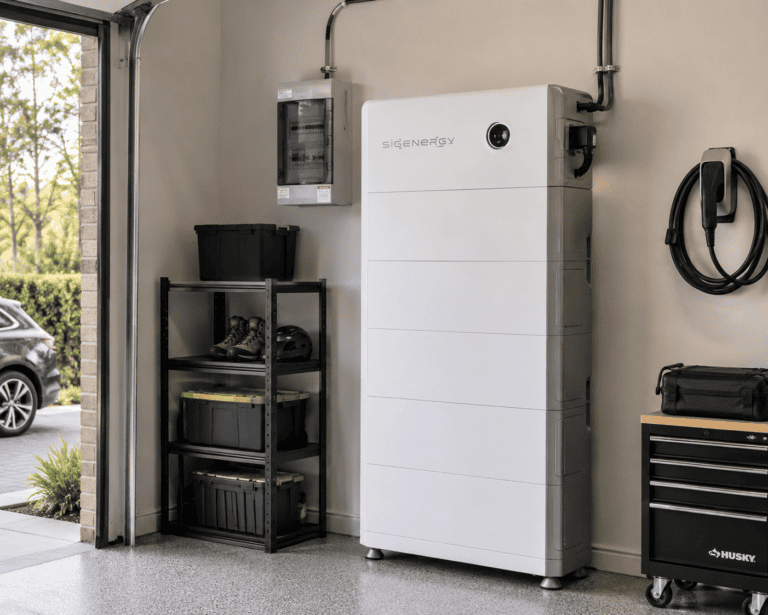
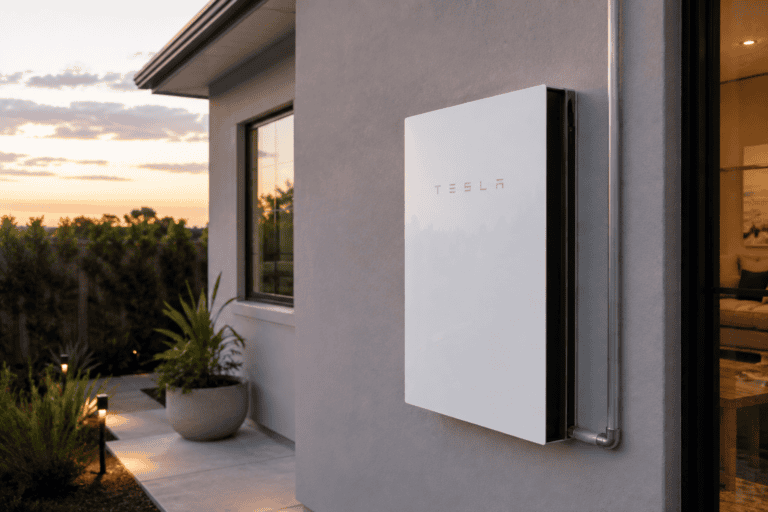
2. Add battery storage A battery converts cheap daytime exports into avoided expensive grid imports. At SA rates of 40c import versus 5c export, every kWh stored is worth 35c more than every kWh exported. The Cheaper Home Batteries Program rebate reduces the upfront cost by approximately 30%. See our complete guide for current details.
3. Compare your electricity plan annually Feed-in tariff rates and plan structures change frequently. A plan that was best 18 months ago may now be mediocre. Your state’s official comparison tool takes 10 minutes and can identify meaningfully better plans.
4. Explore Virtual Power Plant programs VPP programs pay premium rates for battery exports during peak grid demand. In SA, WA, and NSW particularly, VPP event rates can far exceed standard feed-in tariff rates. See our guide to Virtual Power Plants in Australia 2026 for current programs and earnings.
Frequently Asked Questions
Can my retailer reduce my feed-in tariff without warning? In most states, retailers must give notice (typically 10–20 business days) before reducing your feed-in tariff. If your rate is cut, you can switch retailers — use your state’s comparison tool to find a better offer.
Does my feed-in tariff affect my solar rebate? No. The STC rebate on your solar installation and the Cheaper Home Batteries Program rebate on battery storage are both completely separate from your ongoing feed-in tariff.
Is a higher feed-in tariff always better? Not necessarily — and often no. Plans with high export rates frequently offset this with higher supply or usage charges. The only way to compare accurately is total annual bill cost based on your usage profile. Your state’s comparison tool does this calculation for you.
What is a time-varying feed-in tariff? Some retailers pay different rates depending on the time of day. Evening peak exports (when solar isn’t generating but grid demand is high) earn more — often 5–8c. Daytime exports (when solar floods the grid) earn less — sometimes 0c. These plans suit households with batteries that can store and time their exports.
Will feed-in tariffs keep falling? The long-term trend is downward as solar penetration increases. However, time-varying tariffs and VPP programs create new pathways for households with batteries to earn substantially more than flat-rate tariffs would suggest. The incentive is shifting from “export as much as possible” to “export at the right time.”
Rates as at August 2026. Feed-in tariff rates change frequently — always verify current rates directly with your retailer or your state’s official energy comparison tool before making decisions. Victorian rates in particular changed significantly from July 2025 and are now fully market-set.