Off-Grid Solar Australia 2026: Costs, Feasibility and What’s Changed
Off-grid solar in Australia 2026 is the energy independence dream for many Australians — and one of the most frequently misunderstood decisions in the solar market. It’s regularly oversold to households that would be better served by a well-designed grid-connected system, and sometimes undersold to rural properties where it genuinely makes the most sense.
This guide cuts through the marketing and gives you an honest picture of what off-grid solar costs in 2026, who it suits, and what’s changed recently that’s worth knowing.
What Off-Grid Solar Australia 2026 Actually Means
An off-grid solar system is completely disconnected from the electricity grid. Your solar panels, battery storage, and backup generator (if you have one) are your only electricity sources. If your system can’t meet your demand — on cloudy weeks, during high-consumption periods, or after equipment failures — you have no grid backup to fall back on.
This is fundamentally different from a grid-connected solar + battery system, which remains connected to the grid and uses it as a backup when your battery runs low or generation is insufficient. Most Australian households describing themselves as wanting to “go off-grid” actually want energy independence with grid backup — which is a grid-connected battery system, not true off-grid.
Understanding this distinction is important because the costs, risks, and right product choices are very different for each.
Who Off-Grid Solar in Australia Actually Suits
Off-grid makes sense in a relatively narrow set of circumstances:
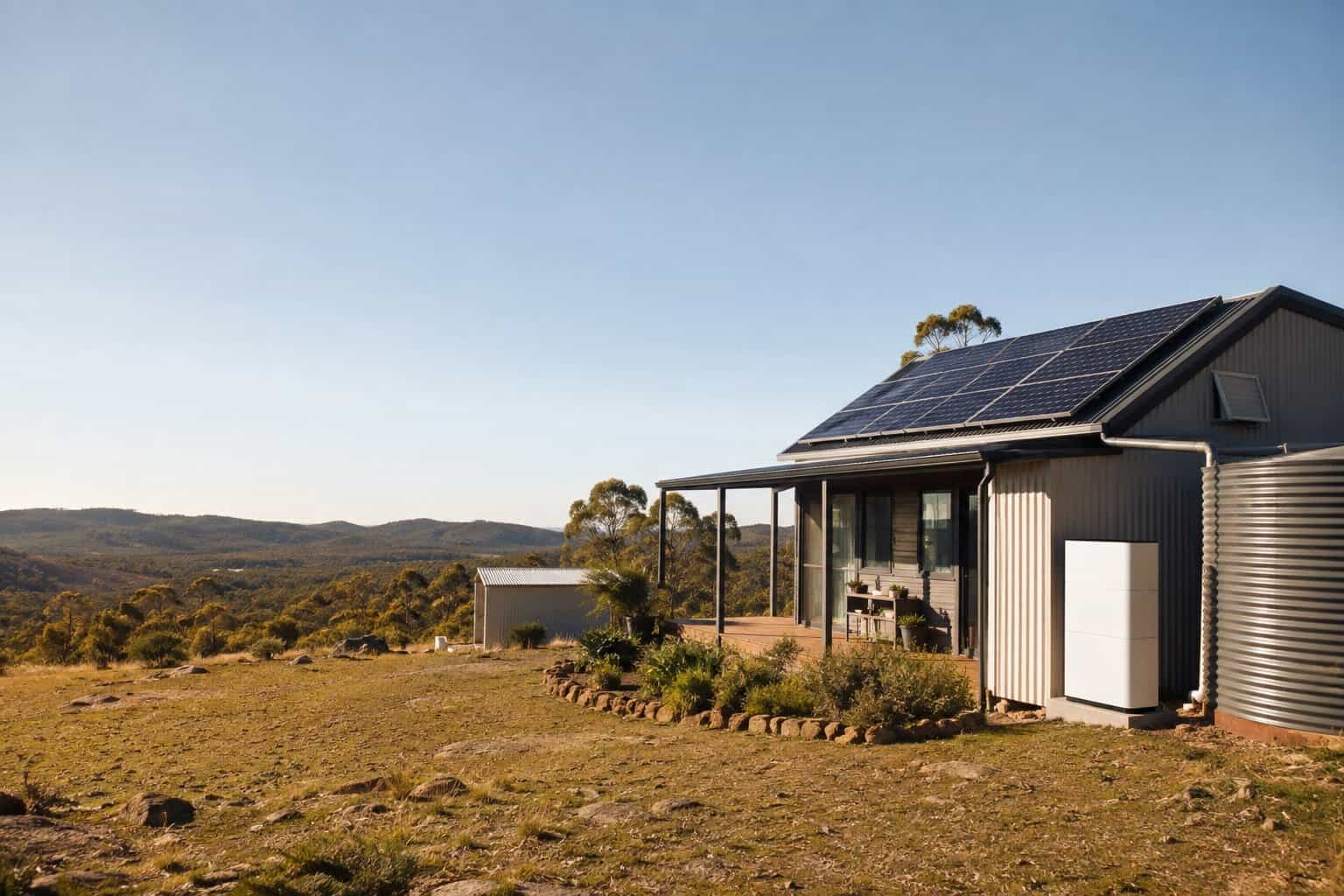
Rural and remote properties without grid access If you’re on a property more than a few kilometres from the grid and would face $20,000–$100,000+ in grid connection costs, off-grid solar almost always makes better economic sense. This is the original and most compelling use case.
Properties with very unreliable grid connections Some rural and regional Australian properties experience so many extended outages that a large grid-connected battery system effectively functions as off-grid anyway. For these households, true off-grid removes the grid connection fee and provides complete energy independence.
Lifestyle properties and hobby farms Properties used as weekenders or rural lifestyle blocks where electricity consumption is modest and intermittent are well-suited to off-grid because the system can be sized conservatively and the consequences of occasional shortfalls are manageable.
Environmentally motivated households with sufficient budget Some urban and suburban households choose off-grid as a philosophical position despite the higher cost. This is a legitimate choice if made with clear eyes about the economics.
Who Off-Grid Solar Doesn’t Suit
Most suburban and urban Australian households If you have reliable grid access, a grid-connected solar + battery system almost always provides better value. You get the benefits of battery storage and solar self-consumption while keeping grid backup as insurance. The grid connection fee ($300–$600/year in most states) is much cheaper than the additional battery capacity needed to handle weeks of poor solar generation.
Households with high or variable electricity consumption Off-grid systems must be sized to handle your worst-case scenario — multiple cloudy weeks in winter, high consumption from guests or changing circumstances. This typically requires significantly more battery capacity than a grid-connected system, adding cost.
Households on tight budgets Off-grid systems cost more upfront than equivalent grid-connected systems. The economics only favour off-grid when the alternative is a very expensive grid connection.
What Does Off-Grid Solar Cost in 2026?
Off-grid system costs vary enormously based on your property’s electricity consumption, location, and how much autonomy (days without solar generation) you want the system to provide.
Small off-grid system (weekender/holiday property, modest use)
- 3–5 kW solar array
- 10–20 kWh battery storage
- Small backup generator
- Approximate total cost: $18,000–$30,000
Medium off-grid system (permanent residence, average consumption)
- 8–15 kW solar array
- 20–40 kWh battery storage
- Backup generator
- Approximate total cost: $35,000–$65,000
Large off-grid system (large home, high consumption, maximum autonomy)
- 15–30 kW solar array
- 40–80 kWh+ battery storage
- Substantial backup generator
- Approximate total cost: $65,000–$120,000+
These costs have fallen significantly over the past three years as battery prices have dropped. A system that would have cost $80,000 in 2022 can now be replicated for approximately $50,000–$60,000 in 2026.
Does the Federal Battery Rebate Apply to Off-Grid Systems?
This is one of the most asked questions about off-grid solar in 2026 — and the answer is: partially.
The Cheaper Home Batteries Program requires the battery to be connected to rooftop solar, which off-grid systems are. However, it also requires VPP capability — the ability to connect to a Virtual Power Plant. True off-grid batteries that are never connected to the grid cannot participate in VPP programs and therefore may not qualify.
In practice, the rebate situation for off-grid installations is nuanced and depends on the specific battery model and how the system is configured. Some off-grid systems use batteries that technically have VPP capability even if it’s never used. Clarify eligibility directly with your installer and the Clean Energy Regulator before assuming the rebate applies.
For properties that maintain a grid connection even with a large battery (sometimes called “grid-assisted” systems), the rebate applies normally.
What’s Changed in 2026
Battery prices have fallen significantly LFP battery storage now costs approximately $400–$700 per kWh at the system level for off-grid installations — down from $700–$1,200/kWh three years ago. This has made off-grid systems meaningfully more affordable, particularly for the medium and large systems that suit permanent residences.
Hybrid inverter technology has improved The inverters that manage off-grid systems — handling solar input, battery charge/discharge, generator integration, and load management — have become more reliable, more feature-rich, and cheaper. Brands like Victron Energy, SMA Sunny Island, and Fronius Symo Hybrid are now well-established in the Australian off-grid market.
Grid-connected + battery systems have also improved The comparison point for off-grid has gotten better too. A household considering off-grid should now compare it against a quality grid-connected system with 20–30 kWh of battery storage — which provides near-total energy independence while retaining grid backup. For many households, this hybrid approach is the better answer.
The Backup Generator Question
Almost all serious off-grid systems include a backup generator for extended periods of poor solar generation — cloudy weeks in winter, unusually high consumption periods, or equipment maintenance windows.
Generator options:
- Petrol/diesel generators: $1,000–$5,000, familiar technology, fuel availability varies in remote areas
- LPG generators: good option where reticulated gas is available, cleaner running
- Hydrogen/fuel cell backup: emerging technology, not yet mainstream in Australian residential off-grid
Factor generator fuel costs and maintenance into your ongoing off-grid operating costs — it’s not “free” electricity beyond the solar investment. A properly sized system with adequate battery storage should only need the generator a handful of times per year.
Off-Grid vs Grid-Connected Battery — The Real Comparison
For most Australian households considering off-grid, the honest comparison is:
True off-grid (medium system, 3-bedroom home):
- Upfront cost: $45,000–$65,000
- Ongoing: generator fuel, maintenance, eventual battery replacement
- Grid connection fee saved: $400–$600/year
- Risk: no backup if system fails or underperforms
Grid-connected solar + large battery (6.6 kW + 20 kWh):
- Upfront cost: $18,000–$25,000 after rebates
- Ongoing: minimal grid connection fee ($400–$600/year), occasional grid import
- Typical grid import after battery: $200–$800/year
- Grid backup available if needed
For most suburban and regional Australian households with reliable grid access, the grid-connected approach saves $25,000–$40,000 upfront and delivers 90–95% of the energy independence of true off-grid at a fraction of the cost. The grid connection fee is cheap insurance.
When to Seriously Consider Off-Grid
Run the numbers on going off-grid seriously when:
- Grid connection cost exceeds $15,000–$20,000 — at this point the capital cost of connecting to the grid starts to approach the cost of an off-grid system
- Your grid is unreliable — more than 5–10 extended outages per year suggests the grid isn’t providing the backup value you’re paying for
- You’re on a very large rural property with multiple dwellings or high power requirements that make grid alternatives impractical
- Your electricity bill is very high — households paying $5,000+/year in electricity have the strongest financial case for a large off-grid investment
Frequently Asked Questions
Can I go off-grid in a suburban home? Technically yes, but it’s rarely the right economic decision if you have reliable grid access. A grid-connected battery system provides most of the same benefits at much lower cost.
How many days of autonomy should an off-grid system have? Most Australian off-grid systems are designed for 2–4 days of autonomy without solar generation. More autonomy requires significantly more battery capacity. A backup generator covers extended periods beyond the battery’s autonomy.
Do I need council approval to go off-grid? In most states, going off-grid requires notifying your network operator and potentially your electricity retailer. The process varies by state. Your installer should handle the relevant notifications as part of the installation.
What happens if my off-grid system fails? This is the key risk of true off-grid. Without grid backup, a failed inverter or battery means no electricity until repairs are made. Good system design includes redundancy where possible, and choosing components with strong Australian service support is important.
Can I add an off-grid system to an existing home? Yes. Off-grid retrofits are possible but typically require replacing your existing grid-connected inverter with a hybrid or off-grid inverter. Assess the total cost of a retrofit against a new build or full system replacement before committing.
Costs reflect the Australian market as at September 2026. Off-grid system costs vary significantly by location, consumption, and autonomy requirements. Always obtain a site-specific assessment from an experienced off-grid installer before making decisions.