Microinverters vs String Inverters Australia 2026: Which Is Better?
When getting solar quotes, you’ll encounter two fundamentally different approaches to converting your solar power: string inverters and microinverters. The choice affects your system’s performance, cost, and how it handles shading. In short, microinverters for solar panels convert each panel’s output individually, while string inverters convert the whole array at once. Here’s how to decide which is right for your home.
The Key Difference
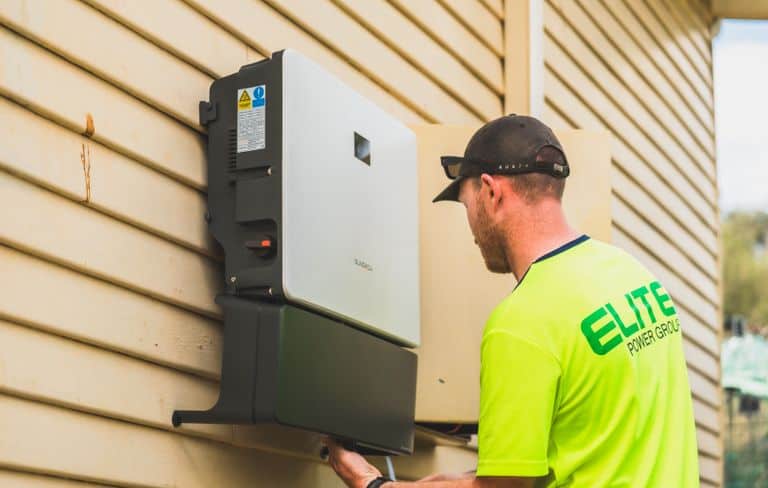
String inverters connect all your panels together in a “string” feeding into one central inverter. It’s the traditional, most common approach. If one panel underperforms (from shading or a fault), it can drag down the output of the whole string.
Microinverters put a small inverter on each individual panel. Each panel operates independently, so shading or a fault on one panel doesn’t affect the others. Enphase is the dominant microinverter brand in Australia.
Comparison Table
| String Inverter | Microinverters | |
|---|---|---|
| Cost (6.6kW system) | Lower ($800–$2,500) | Higher (+$1,000–$2,500) |
| Shading performance | Poorer | Excellent |
| Panel-level monitoring | No | Yes |
| Warranty | 10 years typical | 15 years typical |
| Failure impact | Whole system down | One panel only |
| Best for | Unshaded simple roofs | Shaded or complex roofs |
When to Choose String Inverters
String inverters (from quality brands like Fronius, SMA, or Sungrow) are the right choice for the majority of Australian homes with:
- A simple roof with good north-facing space
- Little or no shading throughout the day
- A single roof plane or orientation
- Budget as a priority
For an unshaded, straightforward installation, a quality string inverter delivers excellent performance at lower cost. There’s no need to pay the microinverter premium.
When to Choose Microinverters
Microinverters (predominantly Enphase in Australia) justify their premium when you have:
- Shading from trees, chimneys, or neighbouring buildings for part of the day
- A complex roof with panels facing multiple directions
- A desire for panel-level monitoring to spot issues quickly
- Plans to expand the system panel-by-panel later
On a partially shaded roof, microinverters can generate meaningfully more electricity over the system’s life because unshaded panels aren’t dragged down by shaded ones. The longer 15-year warranty is also a genuine advantage.
The Middle Option: DC Optimisers
There’s a third option: DC optimisers (SolarEdge is the main brand). These attach to each panel like microinverters but feed into a central inverter. They offer panel-level optimisation and monitoring — similar shading benefits to microinverters — often at a slightly lower cost. Worth considering as a middle ground for shaded roofs.
Which Should You Choose?
For most Australian homes with unshaded roofs, a quality string inverter is the sensible, cost-effective choice. If your roof has genuine shading issues or complex multi-directional panels, microinverters or DC optimisers are worth the premium. Discuss your specific roof with your installer — see our installer selection guide for the right questions to ask.
Frequently Asked Questions
Are microinverters worth the extra cost?
Only if your roof has shading or complex orientation. For simple unshaded roofs, the premium isn’t justified.
Which lasts longer, microinverters or string inverters?
Microinverters typically carry 15-year warranties versus 10 years for string inverters. However, microinverters are on the roof (harder to replace) while string inverters are at ground level.
What are microinverters for solar panels?
A microinverter is a small inverter fitted to each individual solar panel, converting that panel’s DC output to AC on the roof — rather than sending DC power down to one central inverter like a traditional string system. This means each panel operates independently, so shading or a fault on one panel doesn’t drag down the rest of the array.
Specifications and pricing reflect the Australian market as at September 2026.