Solar Hot Water vs Heat Pump Water Heater Australia 2026: What Saves More?
Hot water accounts for roughly 25% of the average Australian household’s energy bill. It’s the second-largest energy cost after heating and cooling — and it’s one where the right technology choice can save $500–$1,000 per year without any change in lifestyle.
In 2026, two technologies dominate the energy-efficient hot water market: solar hot water systems and heat pump water heaters. Both are significantly cheaper to run than electric resistance or gas storage systems. The question is which one saves more for your specific home.
This guide gives you a straight comparison — costs, savings, rebates, and which technology wins in different circumstances.
The Short Answer
For most Australian households in 2026, a heat pump water heater is the better choice — particularly if you already have solar panels or are installing them.
Here’s why: heat pump water heaters can be programmed to run during the day when solar generation is highest, effectively using free solar electricity to heat your water. They cost less to install than solar hot water systems, are eligible for the same government rebates, and perform more reliably year-round.
Solar hot water systems remain competitive for households without rooftop solar, particularly in high-irradiance locations like Queensland, WA, and the NT.
What Each Technology Actually Is
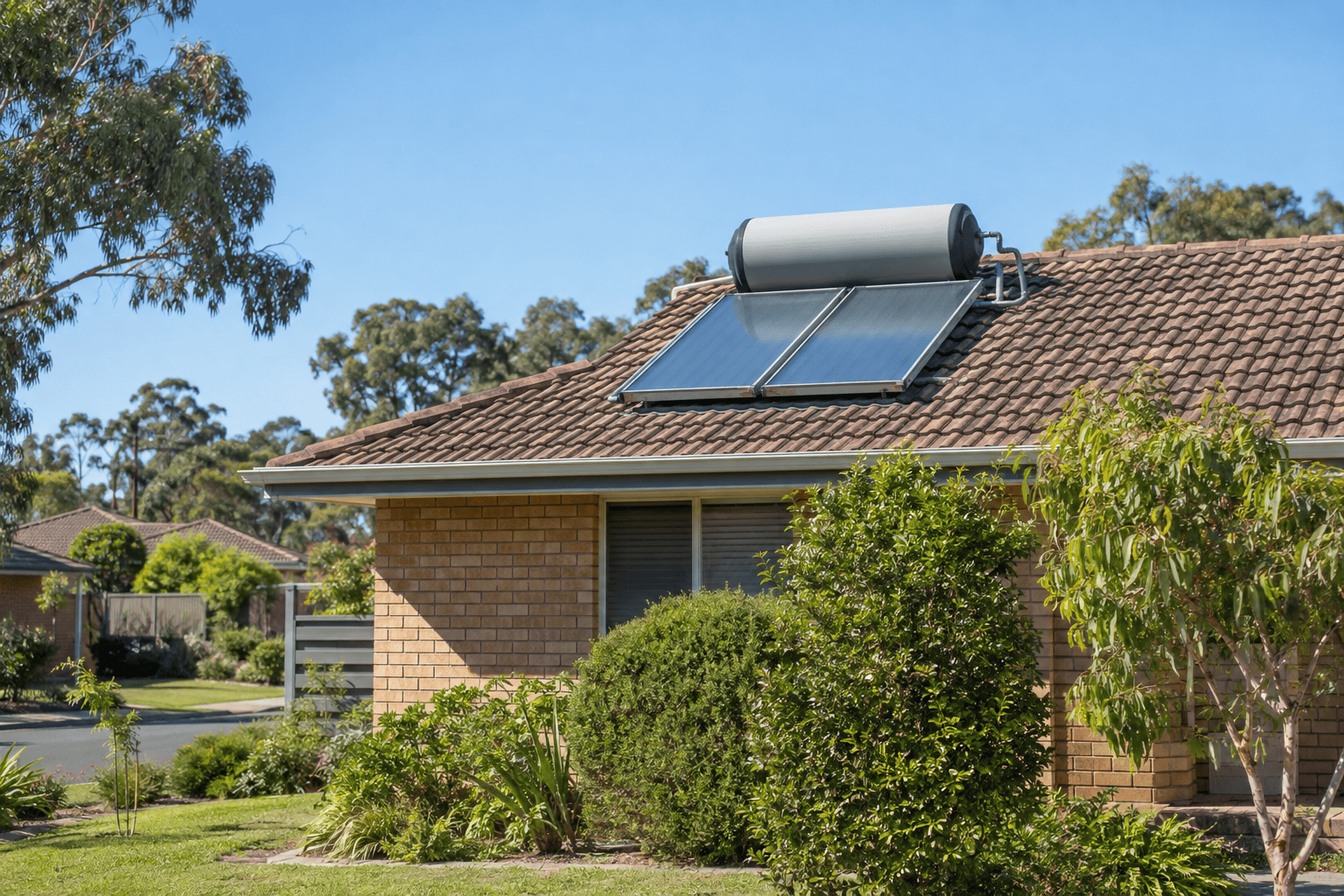
Solar hot water systems use roof-mounted solar collectors (not photovoltaic panels) to heat water directly using the sun’s thermal energy. The heated water is stored in a tank. Most systems have an electric or gas booster for cloudy days.
Two main types:
- Flat plate collectors — less expensive, suited to warmer climates
- Evacuated tube collectors — more efficient, better in cooler climates and on overcast days
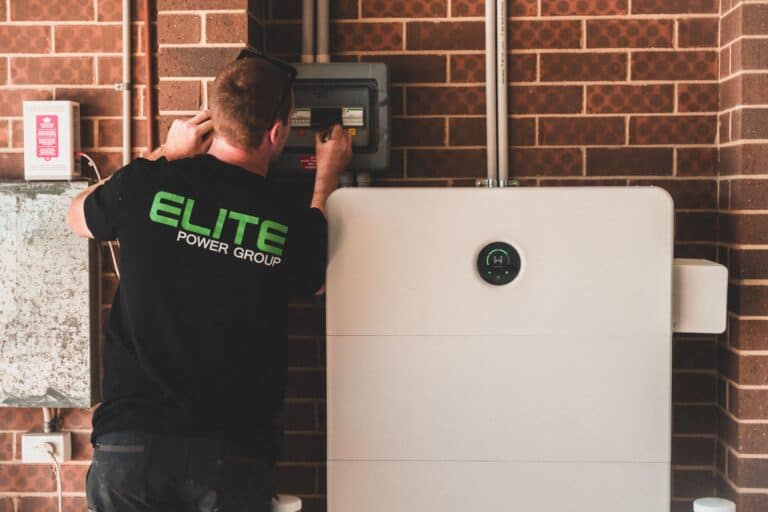
Heat pump water heaters work like a reverse refrigerator — they extract heat from the surrounding air and use it to heat water. They use electricity to run the compressor but generate 3–5 times more heat energy than the electricity they consume. A heat pump using 1 kWh of electricity produces 3–5 kWh of heat — this ratio is called the Coefficient of Performance (COP).
Cost Comparison 2026
Upfront installed cost (before rebates)
| System type | Installed cost range |
|---|---|
| Gas storage (baseline) | $900–$1,800 |
| Electric resistance storage | $700–$1,400 |
| Solar hot water (flat plate) | $2,500–$4,500 |
| Solar hot water (evacuated tube) | $3,500–$6,000 |
| Heat pump water heater | $2,000–$4,000 |
After government rebates
Both solar hot water systems and heat pump water heaters qualify for Small-scale Technology Certificates (STCs) — the same federal rebate scheme used for solar panels. The rebate value depends on your STC zone and the system’s rated annual energy production.
In 2026, typical rebate values:
- Solar hot water (flat plate, Zone 3 — Sydney): $600–$900
- Solar hot water (evacuated tube, Zone 3): $800–$1,200
- Heat pump water heater (Zone 3): $700–$1,100
After rebates, the installed cost difference between solar hot water and heat pump narrows to roughly $500–$1,500 in most cases.
Running Cost Comparison
This is where the two technologies diverge most significantly.
Without rooftop solar
| System | Annual running cost (3–4 person household) |
|---|---|
| Electric resistance | $700–$1,100 |
| Gas storage | $400–$700 |
| Solar hot water (good sun, flat plate) | $100–$250 (booster costs) |
| Solar hot water (evacuated tube) | $80–$200 (booster costs) |
| Heat pump (grid electricity) | $200–$400 |
Solar hot water wins on running costs when running purely on solar thermal energy — the sun’s heat is free. Heat pumps use electricity, though much more efficiently than resistance systems.
With rooftop solar panels
This changes the calculation significantly. A heat pump programmed to run during the day uses solar-generated electricity — effectively free power. This can reduce the heat pump’s annual running cost to $30–$100, matching or beating solar hot water.
Additionally, a heat pump adds meaningful demand for your solar generation during the day, improving your self-consumption rate — which is exactly what you want when feed-in tariffs are low.
Annual Savings vs Standard Electric
Compared to a standard electric resistance water heater (the baseline for most households upgrading):
| System | Annual saving (3–4 person home) |
|---|---|
| Gas storage | $300–$500 |
| Solar hot water (flat plate) | $500–$800 |
| Solar hot water (evacuated tube) | $550–$900 |
| Heat pump (grid only) | $400–$700 |
| Heat pump (with solar panels, daytime running) | $600–$900 |
Payback Period Comparison
| System | Net cost after rebates | Annual saving | Payback |
|---|---|---|---|
| Solar hot water (flat plate) | $1,800–$3,500 | $500–$800 | 3–7 years |
| Solar hot water (evacuated tube) | $2,500–$4,800 | $550–$900 | 4–8 years |
| Heat pump (grid) | $1,200–$3,000 | $400–$700 | 2.5–6 years |
| Heat pump (with solar) | $1,200–$3,000 | $600–$900 | 1.5–4 years |
The heat pump with existing rooftop solar delivers the fastest payback of any option — often under 3 years — because it leverages free solar electricity.
Climate Considerations
Heat pump water heaters perform best above 5°C. In most Australian climates this isn’t an issue, but in alpine areas or southern Tasmania during winter, performance drops. Modern heat pump models are rated down to -10°C, so even in Melbourne or Hobart, cold weather performance is acceptable.
Solar hot water is more dependent on sunshine hours. Evacuated tube systems are better in Melbourne, Hobart, or overcast climates. Flat plate systems are ideal in Queensland, WA, and SA where sunshine is reliable.
| Location | Better choice |
|---|---|
| Darwin, Townsville, coastal QLD | Solar hot water (flat plate) — maximum sunshine |
| Brisbane, Perth, Adelaide | Either — both perform well |
| Sydney, Canberra | Heat pump preferred (with solar panels) |
| Melbourne, Hobart | Heat pump (evacuated tube solar also viable) |
| Alpine/cold regions | Heat pump (modern cold-climate models) |
Space and Installation Requirements
Solar hot water systems require roof-mounted collectors — typically 2–4 square metres of north-facing roof space separate from your solar panels. If you have limited roof space or a complex roof, this can be a constraint.
Heat pump water heaters are ground-mounted (or sometimes wall-mounted) units that need adequate airflow around them. They typically require 1–2 square metres of clear space in a garage, laundry, or outdoor area. They produce some noise (similar to an air conditioner) — consider placement near bedrooms.
State-Specific Rebates
Some states offer additional rebates on top of the federal STC scheme:
Victoria: Solar Homes Program offers rebates on solar hot water and heat pump systems for eligible households. Check current eligibility at solar.vic.gov.au.
NSW: Low Income Household Rebate and other programs can stack with federal STCs in some circumstances. Check Service NSW for current programs.
Queensland and SA: Check with your state energy authority for any current programs — these change regularly.
ACT: Various energy efficiency programs are available through the ACT Government’s Sustainable Household Scheme.
The Electric Vehicle Factor
If you have or are planning to buy an electric vehicle, a heat pump water heater becomes even more attractive. Both the EV charger and the heat pump can be programmed to run during solar generation hours — maximising self-consumption of your rooftop solar and minimising grid imports.
A household with solar panels, a heat pump hot water system, and an EV charger can potentially run most of its energy needs from rooftop solar, dramatically reducing electricity bills.
Which Should You Choose?
Choose a heat pump water heater if:
- You already have solar panels
- You’re installing solar panels at the same time
- You have limited north-facing roof space
- Your budget favours a lower upfront cost
- You’re in a cooler southern climate
Choose solar hot water if:
- You don’t have and aren’t planning rooftop solar
- You’re in a high-sunshine climate (QLD, WA, NT, SA)
- Your roof has good north-facing space available beyond your solar panels
- You prefer a simpler system with fewer mechanical components
Replace gas with either if:
- Your gas hot water system is approaching end of life
- You’re looking to electrify your home and reduce gas usage
- You want to maximise the benefit of existing solar panels
Frequently Asked Questions
Can I get both a solar panel rebate and a hot water rebate? Yes. The solar panel STC rebate and the hot water system STC rebate are completely separate. You can claim both when installing solar panels and a new hot water system simultaneously.
Do heat pump water heaters work at night? Yes — they run on grid electricity after dark. To maximise savings, programme them to run during daylight hours when solar generation covers the electricity use.
How long do heat pump water heaters last? Most are warranted for 5–10 years with a lifespan of 10–15 years. Solar hot water systems typically last 15–20 years with proper maintenance.
Is a heat pump water heater noisy? Modern units produce approximately 40–50 decibels — similar to a quiet air conditioner. Position them away from bedroom windows and neighbours’ living areas where possible.
What size heat pump do I need? A 160–200 litre tank suits 1–3 people. A 250–315 litre tank suits 3–5 people. A 315–400 litre tank suits larger households or those with high hot water use.
Costs and savings estimates reflect the Australian market as at September 2026. Actual savings depend on your specific hot water usage, climate, electricity tariff, and solar system size. Always obtain multiple quotes before purchasing.